2026-09-15 ·
How to Troubleshoot a Leaking Sprinkler System in Tucson
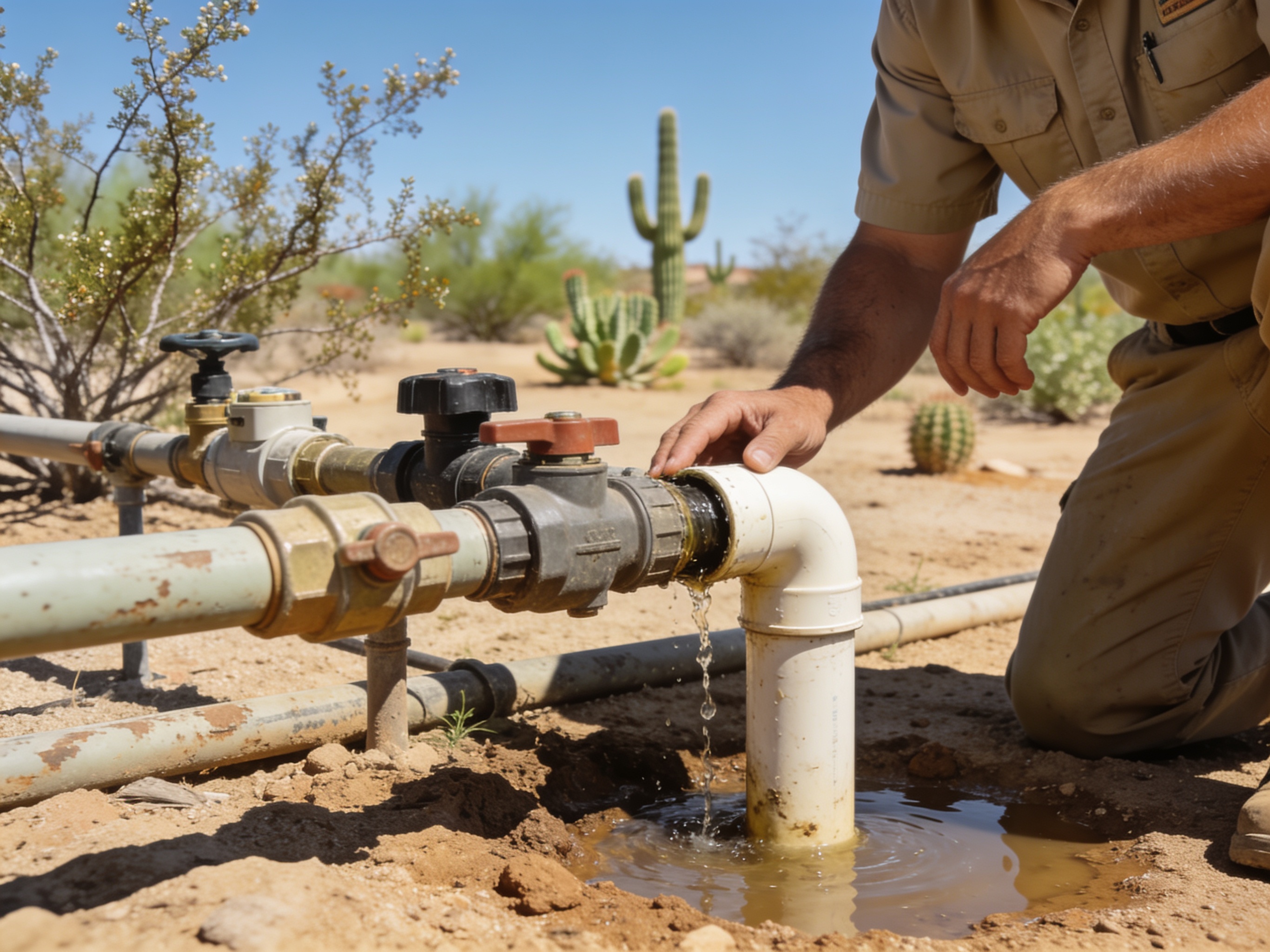
A leaking sprinkler system in Tucson often shows up first as soggy patches near heads or valves, and the most direct way to start troubleshooting is by running each zone for five minutes while walking the yard to note where water surfaces unexpectedly or pressure drops below normal flow.
Spotting Visible Leak Indicators in Tucson Yards
Tucson homes built in the 1970s through 1990s around the 22nd Street corridor often have original PVC laterals that crack from repeated heat expansion and monsoon saturation. Walk the property after a cycle and look for standing water pooling longer than thirty minutes, mushy soil that stays soft even in dry months, or erosion channels forming near rock landscaping. Check sidewalks and driveways for water seeping up through expansion joints, a common sign of a lateral line break under compacted desert soil. Note any green rings or extra growth around a single head while the rest of the zone looks stressed; this points to a cracked riser or leaking seal rather than overwatering.
Testing Sprinkler Heads and Risers
Remove each sprinkler head in the affected zone and inspect the screen for debris that can force water out the wrong path. Turn the zone on again and watch for misting at the base of the head instead of a clean spray pattern; that usually means the o-ring or wiper seal has hardened from mineral buildup in Tucson’s hard water. Replace any head that continues to drip after the zone shuts off, because a faulty check valve lets water drain back and erode the surrounding soil. In neighborhoods like Rita Ranch and Tanque Verde, where yards slope toward arroyos, a leaking head can send water under the foundation if left unchecked for more than one season.
Checking Valves, Pressure, and Main Lines
Locate the valve box, usually near the backflow preventer on the east side of most Tucson properties, and listen for hissing when the system is off. A constant hiss indicates a diaphragm that no longer seats properly or debris caught in the solenoid. Use a pressure gauge on the test cock to confirm static pressure sits between 40 and 60 psi; readings above 70 psi often split older poly pipe common in 1980s Catalina Foothills installations. If pressure holds but water still appears in the wrong place, the issue is likely a cracked lateral rather than the main line. Irrigation leak detection tools can pinpoint underground breaks without digging up the entire zone.
Accounting for Local Soil and Seasonal Effects
Caliche layers under many East Tucson yards force water to travel sideways instead of draining down, so a small pipe crack can surface fifty feet away from the actual break. During summer monsoons, saturated ground masks slow leaks until fall when the soil dries and cracks reappear. In winter, even brief freezes can split exposed risers on north-facing slopes in Saddlebrooke. Track which zones run after rainfall; if a zone activates during a storm, the rain sensor or wiring may be shorted by moisture intrusion. These patterns repeat across Vail and Sahuarita properties where gravelly alluvial soils shift with each heavy rain.
Once you have isolated the zone and ruled out simple head or valve fixes, a persistent underground leak usually requires irrigation pipe repair to replace the damaged section and restore even coverage. Homeowners who notice multiple wet areas or sudden pressure loss should review the signs listed in Top 7 Signs Your Tucson Irrigation System Needs Emergency Repair before the next scheduled cycle.