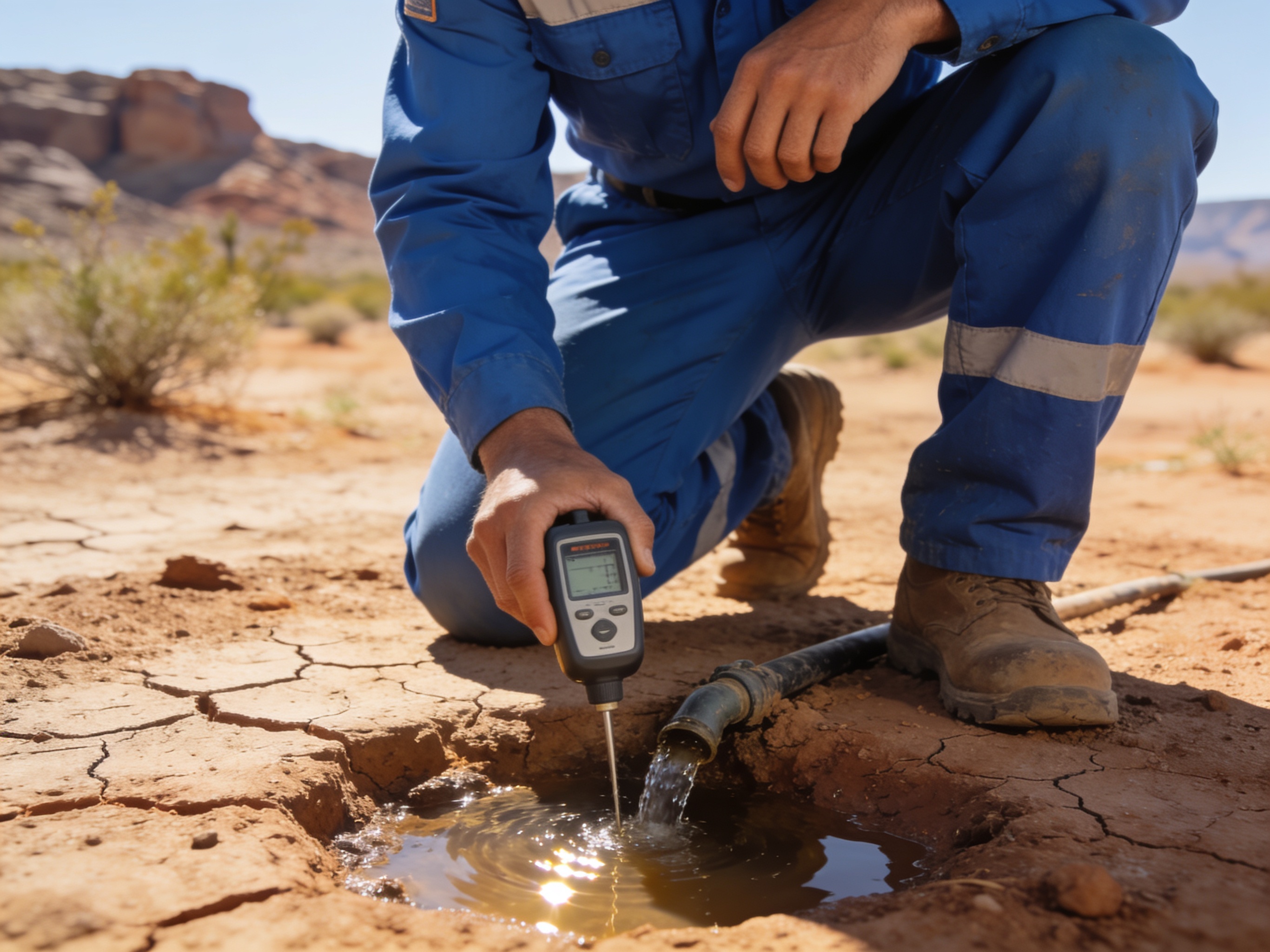
Tucson homes built before the 1990s often use older PVC or poly pipe that cracks from repeated expansion during summer monsoons and contraction in winter lows. Hard water deposits from the Colorado River supply accelerate corrosion at joints, especially in neighborhoods east of downtown like those near 22nd Street. Detection requires pressure testing and acoustic listening devices because surface clues are rare until a sinkhole appears or plantings die in clay-heavy soils.
Monsoon runoff can shift soil and expose lines in yards with slopes common around the Catalina foothills transition zones. Technicians must account for shared lines between adjacent properties in denser subdivisions, where a leak on one side affects the other. Code requires backflow prevention devices on all new repairs, and ignoring this during detection work can lead to city fines during inspections.
Drip irrigation systems popular in water-restricted Tucson yards hide leaks inside emitter tubing that only shows up as uneven plant growth or soggy spots after a rain. Technicians trace these by isolating zones and using moisture meters rather than relying on visual inspection alone. Early detection avoids the higher cost of replacing entire manifolds when a single valve seat fails from mineral buildup.
Technician insight
In Tucson the thing that catches most people out with irrigation leak detection is caliche soil mixed with hard water scale; it masks the sound and slows moisture spread so leaks stay hidden until they reach the foundation of 1970s ranch homes east of 22nd Street.
Hidden Mainline Leak Near 22nd Street
A homeowner noticed one zone running weak after monsoon season. Pressure testing showed a drop on the mainline feeding the backyard. Acoustic work located the leak under compacted caliche two feet from the house slab. We replaced a cracked poly section with new PVC and retested all zones before backfill.
Irrigation Leak Detection Services We Offer
✓Underground Pipe Leak Detection
Trace and pinpoint leaks in mainlines buried under turf or hardscape using pressure and acoustic tools before excavation begins.
✓Sprinkler Valve Leak Inspection
Test valve boxes for internal seat wear or cracked bodies that allow constant seepage even when the zone is off.
✓Drip Line Leak Location
Isolate sections of drip tubing and emitters to find hidden cracks caused by UV exposure and root intrusion common in Arizona yards.
✓Pressure Loss Diagnosis
Measure system pressure at multiple points to identify restrictions or leaks that reduce coverage without obvious wet spots.
✓Post-Monsoon Leak Check
Inspect lines after heavy rains for soil shifts that crack joints or move valves in neighborhoods with heavier clay content.
Irrigation Leak Detection Cost in Arizona, Tucson
| Service | Typical Range | What Affects It |
|---|---|---|
| Basic Zone Pressure Test | $125–$225 | Single visit when no digging is needed |
| Full System Acoustic Scan | $250–$450 | Multiple zones and buried lines in larger yards |
| Leak Excavation and Repair | $350–$750 | Depends on depth, pipe size, and access under patios or driveways |
| Drip System Isolation | $175–$325 | Emitter tubing checks in water-wise landscapes |
Ranges are typical for Arizona, Tucson and confirmed with an exact written quote before any work starts.
How it works
- 1
Zone Isolation
Shut off individual zones and measure static pressure to narrow the search to the affected section of the system.
- 2
Acoustic Listening
Use ground microphones along suspected lines to detect the sound of escaping water through soil and turf.
- 3
Excavation and Confirmation
Dig only at confirmed leak points to expose the pipe, verify the break, and document the damage type.
- 4
Repair and Retest
Replace the damaged section with schedule 40 PVC or compatible fittings, then repressurize and check all zones for leaks.
Pricing
Most Tucson irrigation leak detection jobs fall between basic zone testing and full excavation repairs.