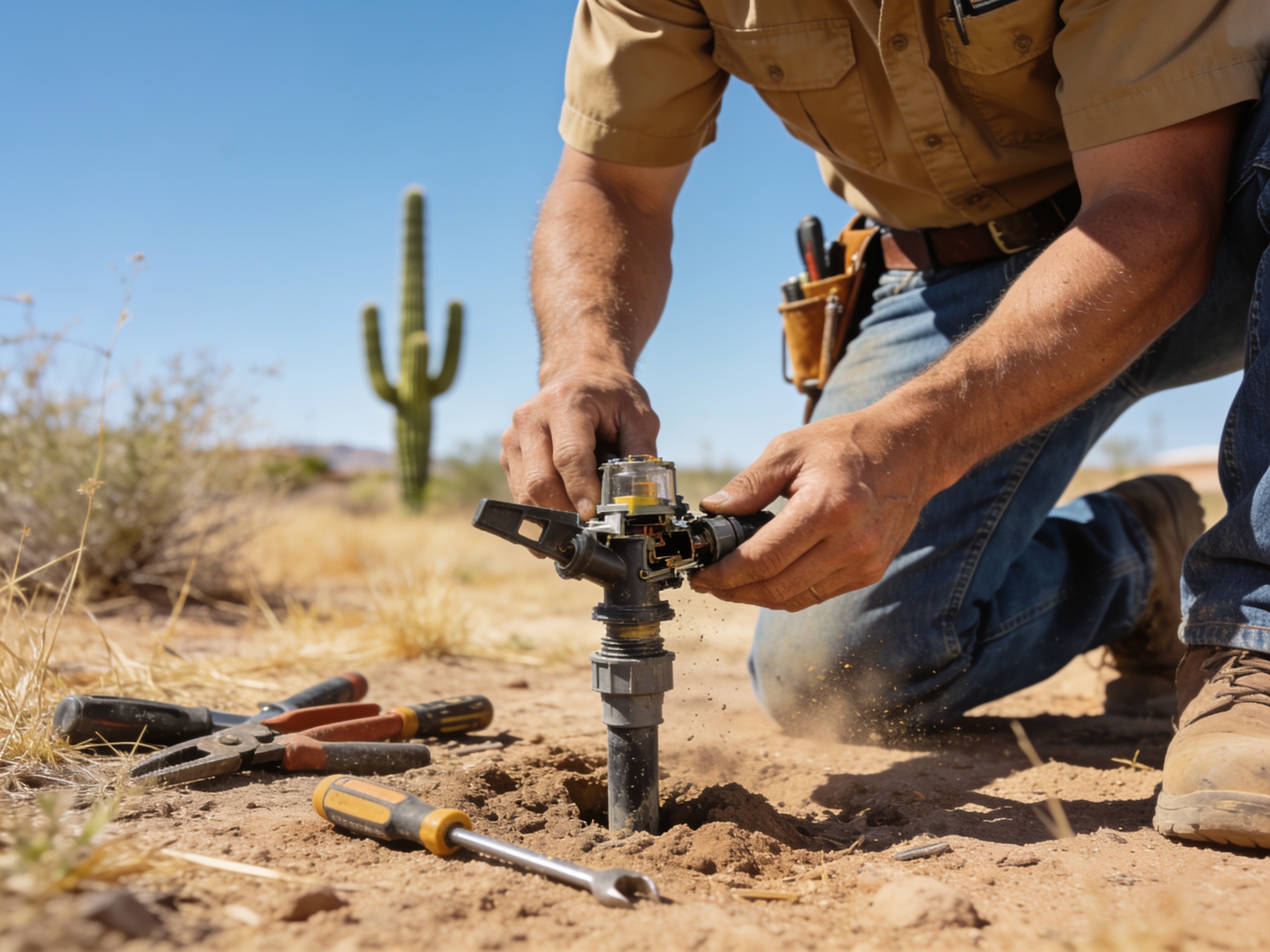
Tucson properties built from the 1960s through the 1990s often have original PVC lines that become brittle from constant UV exposure and hard water scaling. When a zone stops working, the first step is locating the break without tearing up established desert landscaping. Technicians use pressure testing and listening devices to find leaks near sidewalks or driveways where shifting soil from monsoon rains has stressed joints.
Common failures include cracked rotor heads from foot traffic in denser neighborhoods like Sam Hughes and University area homes, plus solenoid failures on valves buried in caliche-heavy soil. Replacement parts must resist the high mineral content of Tucson water, so brass and UV-stabilized components outlast standard plastic fittings. Ignoring a small leak can lead to sinkholes along property lines or water pooling against foundations during heavy summer storms.
Code requirements in Pima County call for backflow prevention devices on all irrigation systems. During repair visits, technicians check that existing assemblies still meet current standards and replace worn test cocks or shutoff valves when needed. Work is scheduled around peak heat hours to protect both crew and turf, with most jobs completed the same day when parts are carried on the truck.
Technician insight
In Tucson the thing that catches most people out with sprinkler repair is how quickly hard water scale builds inside valves and heads once monsoon season ends. Clay and caliche soils around 22nd Street and east-side neighborhoods shift after every big rain, cracking old glued joints that were fine all winter.
Midtown Tucson zone failure
A homeowner in the Sam Hughes neighborhood reported one zone running constantly after a July storm. Pressure testing showed a cracked elbow under the driveway. The crew cut a narrow trench, replaced the fitting with schedule 40 PVC and new glue joints rated for Tucson water pressure, then restored the surface. The zone now shuts off cleanly and the lawn no longer shows pooling near the sidewalk.
Sprinkler Repair Services We Offer
✓Sprinkler Head Replacement
Swap damaged rotors or spray heads with pressure-regulated models suited to Tucson’s high evaporation rates and hard water.
✓Irrigation Valve Repair
Rebuild or replace solenoid valves that fail from mineral buildup or monsoon flooding common in Pima County yards.
✓Underground Pipe Leak Repair
Locate and fix PVC breaks caused by soil movement in older Midtown and Foothills neighborhoods without major excavation.
✓Zone Troubleshooting
Diagnose why specific zones run too long or not at all, checking wiring, controllers, and water pressure at the street.
✓Backflow Preventer Service
Test and repair or replace assemblies to keep systems compliant with Pima County requirements.
Sprinkler Repair Cost in Arizona, Tucson
| Service | Typical Range | What Affects It |
|---|---|---|
| Sprinkler head replacement | $85–$180 | Per head; higher in rocky or sloped yards |
| Valve rebuild or replacement | $175–$350 | Includes solenoid and box lid when needed |
| Pipe leak excavation and repair | $250–$550 | Varies with depth and proximity to hardscape |
| Backflow preventer repair | $140–$275 | Test and minor parts; full replacement adds cost |
Ranges are typical for Arizona, Tucson and confirmed with an exact written quote before any work starts.
How it works
- 1
Site Inspection
Walk the property to identify visible damage and map active zones using the existing controller.
- 2
Pressure and Flow Testing
Isolate each zone to measure pressure loss and pinpoint leaks or clogged heads.
- 3
Targeted Repair
Replace or rebuild the faulty component while protecting surrounding desert plantings and hardscape.
- 4
System Verification
Run all zones, confirm even coverage, and note any future maintenance items for the homeowner.
Pricing
Most sprinkler repairs fall between $150 and $600 depending on the number of zones affected and whether excavation is required.