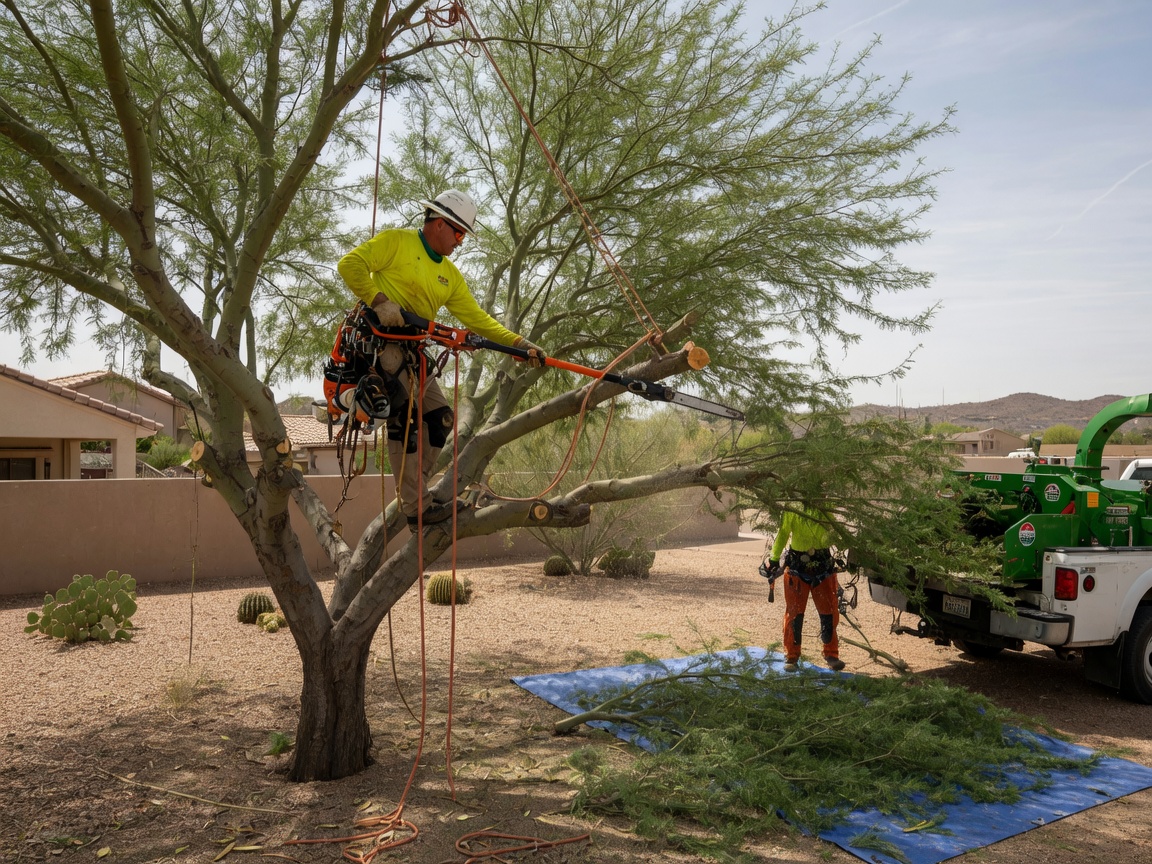
Tucson properties often feature mature mesquite, palo verde, and acacia trees planted decades ago around 1960s and 1970s ranch homes. These species drop heavy limbs during summer storms, and improper cuts can open pathways for pests that spread to nearby irrigation valves. Crews start by mapping root zones because alkaline soil here limits recovery from flush cuts. Work stays clear of overhead lines common on East 22nd Street blocks where trees have grown into utility easements over time.
Monsoon winds hit hardest on the east side where open lots funnel gusts between houses. Trimming focuses on reducing sail effect on the south and west sides of the canopy while leaving enough foliage to shade the trunk from intense sun. Crews remove only live wood that shows cracks or included bark, then treat the cut with a light sealer suited to low-humidity air. Homeowners notice fewer fallen branches the following season when trimming happens before June.
Access on narrow Tucson lots requires sectional lowering rather than free-fall drops to protect existing drip lines and pavers. Soil compaction from equipment is avoided by laying down plywood tracks, especially on lots with shallow caliche layers. After cuts, all debris is hauled off so it does not clog nearby storm drains that already struggle during heavy rain events.
Technician insight
In Arizona, the thing that catches most people out with tree trimming is how shallow caliche and alkaline soil make trees less stable after aggressive topping, especially on older East Tucson lots where roots already compete with irrigation lines for water.
Mesquite Overhang on East 22nd
Homeowner reported branches brushing the roof after spring growth. Inspection showed limbs resting on a drip line and one cracked section over the driveway. Crews performed targeted reduction cuts, removed the cracked wood, and cleared all debris without disturbing the existing irrigation valves. The tree now clears the roof by three feet and shows no signs of stress during the first monsoon.
Tree Trimming Services We Offer
✓Mesquite Pruning
Selective thinning of mesquite canopies to reduce wind resistance while preserving the natural umbrella shape common in Tucson yards.
✓Palo Verde Shaping
Light structural pruning that removes crossing branches and suckers without stripping the green bark that protects these trees from desert sun.
✓Deadwood Removal
Targeted extraction of dead limbs that attract borers and drop onto roofs or irrigation heads during monsoon season.
✓Palm Tree Trimming
Removal of old fronds and fruit clusters on date and fan palms to prevent nesting debris from reaching nearby sprinkler valves.
✓Overhang Clearing
Cutting branches that extend over driveways, sidewalks, and utility boxes common on 22nd Street properties.
Tree Trimming Cost in Arizona, Tucson
| Service | Typical Range | What Affects It |
|---|---|---|
| Standard mesquite or palo verde trim | $175–$325 | Single tree under 20 feet with clear ground access |
| Palm frond removal | $125–$225 | Per tree, includes fruit cluster cleanup |
| Deadwood and hazard reduction | $250–$450 | Multiple limbs on mature trees near structures |
| Overhang clearing near utilities | $300–$500 | Requires sectional lowering and line coordination |
Ranges are typical for Arizona, Tucson and confirmed with an exact written quote before any work starts.
How it works
- 1
Site Walk
Walk the property with the homeowner to identify trees near irrigation lines and note any power line conflicts.
- 2
Safety Setup
Place ground protection and rope systems before any cuts to shield existing landscaping and hardscape.
- 3
Selective Cuts
Make clean cuts at branch collars, focusing on dead, crossing, or wind-vulnerable wood first.
- 4
Debris Haul
Chip or remove all material the same day so nothing remains to clog storm drains or irrigation filters.
Pricing
Cost depends on tree height, species, and access around existing irrigation and structures.