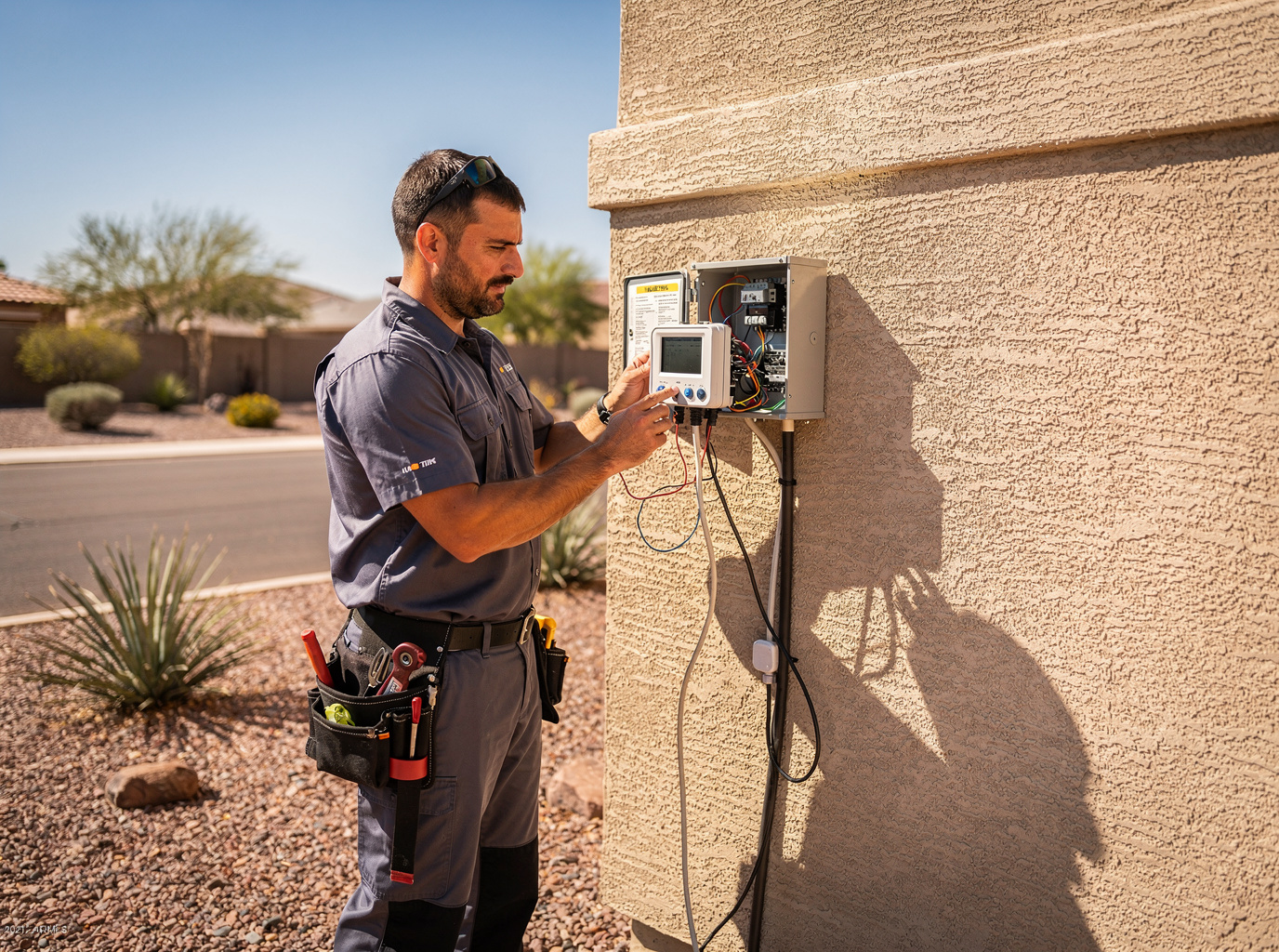
Tucson homes often feature older valve boxes and galvanized piping that smart controllers must integrate with carefully. Installation starts with mapping existing zones and checking compatibility with Tucson Water's conservation rules, which limit run times during peak heat. Technicians select weather-based models that pull local ET data to adjust schedules automatically, preventing overwatering on the hard caliche soils common east of downtown. Proper wiring avoids issues from monsoon moisture that can short out standard units.
Edge cases include properties near the Santa Catalina foothills where elevation changes create uneven pressure, requiring pressure-regulated valves before the controller. In neighborhoods like Rita Ranch and Midvale Park, many systems still run on outdated timers that ignore daily temperature swings above 100 degrees. Upgrading involves testing each solenoid for 24-volt output and sealing connections against dust and flash flooding. Code compliance means ensuring the new unit meets current backflow prevention standards enforced by Pima County.
Homeowners frequently overlook the need to pair the controller with a flow sensor when retrofitting 1980s-era homes in the Sam Hughes district. Without it, leaks go undetected until monthly bills spike. The process includes programming seasonal adjustments for winter dormancy and linking the unit to a phone app for remote shutoff during rare freezes. This level of detail keeps turf healthy while staying within the city's strict watering ordinances.
Technician insight
In Tucson the thing that catches most people out with smart irrigation controller installation is the combination of hard water scale and sudden monsoon downpours that corrode cheap connectors within a single season. Homes east of 22nd Street often still have the original 1970s valve boxes that need extra sealing before the new controller can be trusted.
Rita Ranch Retrofit
A homeowner's fixed timer was running zones during afternoon storms, wasting water on caliche soil. We found two leaking solenoids and outdated wiring. Replaced the controller with an ET model, added a flow sensor, and sealed the box. The system now pauses automatically and the property stays within Tucson Water limits.
Smart Irrigation Controller Installation Services We Offer
✓Residential Smart Controller Setup
Full installation of Wi-Fi enabled controllers on single-family homes in Tucson, including zone mapping and app integration for daily water savings.
✓Monsoon-Ready Controller Upgrade
Replacement of existing timers with weather-responsive units that pause schedules during heavy rains common in Pima County summers.
✓ET-Based Programming Service
Custom evapotranspiration programming using Tucson-specific weather data to match irrigation to actual lawn needs rather than fixed timers.
✓Valve Zone Integration
Connecting new smart controllers to existing valve boxes while checking for pressure issues typical in older Tucson subdivisions.
✓Backflow Prevention Compliance
Adding or verifying backflow devices during controller installs to meet Pima County requirements on all Tucson properties.
Smart Irrigation Controller Installation Cost in Arizona, Tucson
| Service | Typical Range | What Affects It |
|---|---|---|
| Basic Residential Install (4-6 zones) | $350–$550 | Includes standard Wi-Fi controller and basic programming |
| Larger Property Setup (7+ zones) | $600–$900 | Adds flow sensor and extra wiring runs |
| Monsoon Sensor Integration | $150–$250 | Rain or soil moisture sensor added to existing controller |
Ranges are typical for Arizona, Tucson and confirmed with an exact written quote before any work starts.
How it works
- 1
Site Assessment
Technician inspects current valves, piping, and water pressure at the Tucson address, noting any caliche soil or elevation factors that affect performance.
- 2
Controller Selection
Recommend a model compatible with local Wi-Fi and Tucson Water restrictions, then confirm it handles the property's zone count.
- 3
Physical Installation
Mount the unit, run new wiring if needed, and seal all connections against dust and monsoon exposure.
- 4
Programming and Testing
Load ET-based schedules, connect the app, and run each zone to verify coverage and sensor response.
Pricing
Pricing varies by number of zones and whether existing valves need work.