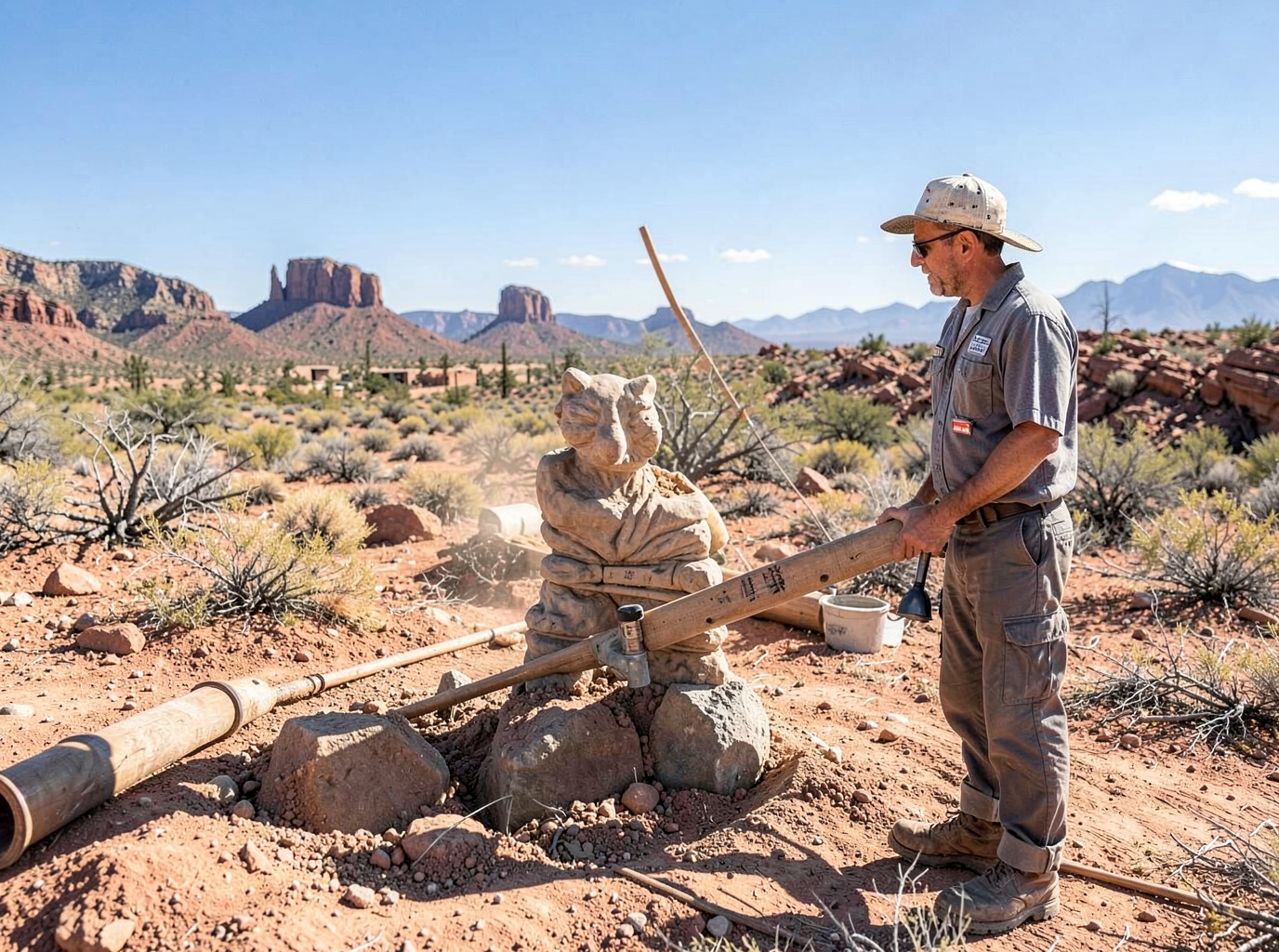
Tucson yards often feature older housing stock with established but outdated lawns that struggle once summer heat intensifies and monsoon rains arrive. Desert landscape design replaces thirsty turf with native and adapted plants such as agave, ocotillo, and desert marigold while installing drip irrigation zones that match the soil's fast drainage. Proper grading prevents runoff toward foundations during heavy downpours common in east-side neighborhoods near 22nd Street.
Homeowners in areas like the Catalina Foothills or central Tucson frequently encounter caliche layers that block root growth and trap water. We amend planting pockets with decomposed granite and organic matter to improve drainage without creating soggy spots that attract pests. Designs also account for the alkaline water supply typical in Pima County, selecting species that tolerate higher pH levels to reduce long-term replacement costs.
Integrating irrigation repair during the design phase prevents future leaks under new hardscaping or gravel beds. Lines are pressure-tested and zoned separately for trees versus groundcovers so each section receives the right volume without waste. This approach keeps water use low while meeting Tucson’s seasonal restrictions and preserving the look of established desert gardens through winter dormancy.
Technician insight
In Tucson the alkaline soil and caliche layers catch most people out with desert landscape design because they plant directly into untouched ground and watch new agaves struggle or drown during monsoons. We always dig test holes near the address on 22nd Street before finalizing plant lists.
East Tucson Front Yard Refresh
A homeowner near 22nd Street had patchy grass dying in the summer heat and leaking spray heads wasting water. We removed the turf, amended planting pockets around existing caliche, installed native plants with new drip zones, and repaired the main line. The yard now uses far less water and holds up through monsoon storms.
Desert Landscape Design Services We Offer
✓Xeriscape Installation
Replaces turf with drought-tolerant plants, gravel, and boulders while tying into existing irrigation lines for minimal water use in Tucson yards.
✓Native Plant Selection
Chooses species suited to Pima County soil and heat that thrive without extra fertilizer once established in desert designs.
✓Irrigation Integration
Adds or repairs drip zones and valves during landscape work so new plantings receive targeted water without runoff on sloped lots.
✓Hardscape and Boulders
Places decomposed granite paths and accent boulders that complement desert plants and reduce erosion around Tucson homes.
✓Seasonal Maintenance Plans
Schedules pruning, irrigation checks, and soil amendments to keep desert landscapes healthy through monsoon and winter cycles.
Desert Landscape Design Cost in Arizona, Tucson
| Service | Typical Range | What Affects It |
|---|---|---|
| Basic Desert Garden Design | $800–$2,200 | Small front yard with native plants and basic drip zones |
| Full Yard Xeriscape | $2,500–$6,000 | Larger lots including hardscape, boulders, and irrigation overhaul |
| Irrigation Integration Add-On | $400–$1,200 | New zones or repairs tied to the landscape project |
Ranges are typical for Arizona, Tucson and confirmed with an exact written quote before any work starts.
How it works
- 1
Site Assessment
Walk the property to note sun exposure, existing irrigation, soil type, and drainage issues common in Tucson neighborhoods.
- 2
Design Development
Create a plant and irrigation layout that matches water zones to plant needs and accounts for monsoon runoff patterns.
- 3
Installation
Amend soil, install plants and drip lines, then test zones for even coverage before final gravel and boulder placement.
- 4
Handover And Schedule
Review watering schedule and set follow-up irrigation checks aligned with Tucson’s seasonal restrictions.
Pricing
Costs depend on lot size, plant count, and whether existing irrigation needs repair or expansion.