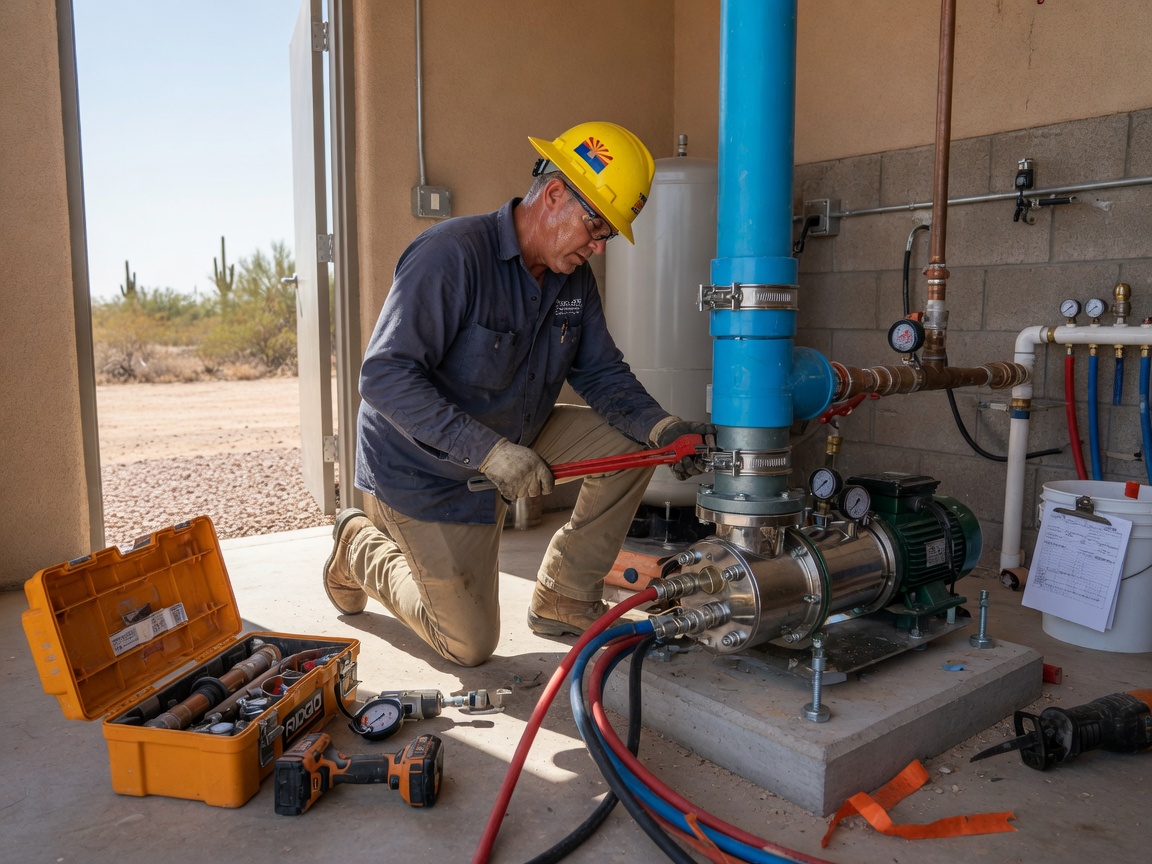
Tucson homes built before 1990 in neighborhoods like 85710 often sit on older galvanized lines that restrict flow, requiring a booster pump to push water through drip lines and rotors without starving zones. We size pumps using actual static pressure readings at the meter and account for elevation changes common on the east side near Pantano Wash. Hard water scaling from the aquifer accelerates impeller wear, so we install stainless steel housings and schedule annual acid flushes during the winter slowdown.
Monsoon sediment and summer heat above 105 degrees force extra consideration for motor cooling and intake screens. Pumps placed in direct sun on slab foundations overheat faster, so we mount units in shaded valve boxes with proper ventilation. Code requires backflow prevention devices on every new installation; we coordinate with Tucson Water inspectors to avoid red tags on properties near 22nd Street corridors.
Edge cases include shared wells in Rancho Perdido subdivisions where multiple homes draw from one line, creating sudden pressure drops when neighbors irrigate. We add variable frequency drives to match demand and prevent short cycling that burns out motors within two seasons.
Technician insight
In Arizona, the thing that catches most people out with booster pump installation is how quickly Tucson's hard water builds scale on the impeller during the long dry season; homes east of Kolb Road with original 1970s copper lines see pumps fail in under three years if the intake screen is not oversized from day one.
East Tucson Pressure Loss
Homeowner in the 85710 zip reported dead rotors on the back slope during morning cycles. We found 38 psi at the meter dropping to 12 psi at the highest zone due to 40-year-old galvanized pipe. Installed a 3/4 HP stainless booster with VFD and new backflow assembly; all zones now hold 28 psi with no short cycling after monsoon sediment cleared.
Booster Pump Installation Services We Offer
✓Residential Booster Pump Installation
Matches pump horsepower to lot size and existing pipe diameter for consistent rotor coverage on single-family homes.
✓Irrigation System Pressure Boost
Adds inline pumps to restore head pressure lost through long runs common in older Tucson subdivisions.
✓Booster Pump Replacement
Swaps failing units with corrosion-resistant models suited to Tucson's mineral-heavy water supply.
✓Sprinkler Zone Integration
Wires new pumps into existing controllers so each zone receives adequate flow without manual valve adjustments.
✓Commercial Landscape Pump Setup
Installs larger capacity units for HOA common areas and business properties along Broadway Boulevard.
Booster Pump Installation Cost in Arizona, Tucson
| Service | Typical Range | What Affects It |
|---|---|---|
| Standard residential installation | $950–$1,800 | Single pump under 1 HP on accessible meter |
| Larger lot or multi-zone boost | $1,600–$2,900 | Higher HP or VFD required for elevation or long runs |
| Replacement of existing pump | $750–$1,400 | Labor only when plumbing and power are already in place |
| Backflow device addition | $300–$550 | Required on most Tucson installs |
Ranges are typical for Arizona, Tucson and confirmed with an exact written quote before any work starts.
How it works
- 1
Site Pressure Test
Measure static and dynamic pressure at multiple points across the property during peak demand hours.
- 2
Pump Sizing Calculation
Factor in pipe age, elevation, and zone count to select the correct horsepower and impeller type.
- 3
Electrical and Plumbing Prep
Run dedicated circuit and install isolation valves plus backflow device per Pima County requirements.
- 4
Mount and Wire Unit
Secure pump in ventilated enclosure, connect suction and discharge lines, then program controller integration.
- 5
Final Flow Verification
Run all zones and confirm uniform pressure before leaving the site.
Pricing
Pricing varies with pump size, electrical access, and whether trenching or backflow upgrades are needed.